Conflict Resolution Practicum Spotlight: Inclusive Peacebuilding in Post-Conflict Syria
M.A. in Conflict Resolution students explore topics through hands-on conflict resolution training.
By May Kadow (G’26) & Antoine Brimbal (G’26)
The M.A. in Conflict Resolution practicum is a hands-on experience that spans two semesters. In this immersive, team-based course, Conflict Resolution students collaborate with classmates and engage with external partners to design a project that delivers solutions to a real-world problem that reflects their interests and skills while addressing urgent conflict challenges. By applying academic knowledge to practical solutions, students deepen their understanding of conflict resolution, cultivate essential knowledge and strengthen their professional skillset.
Read this team’s firsthand experience finding motivation for their practicum project focused on peacebuilding in post-conflict Syria and how the work has prepared them for advancement in their professional journey.
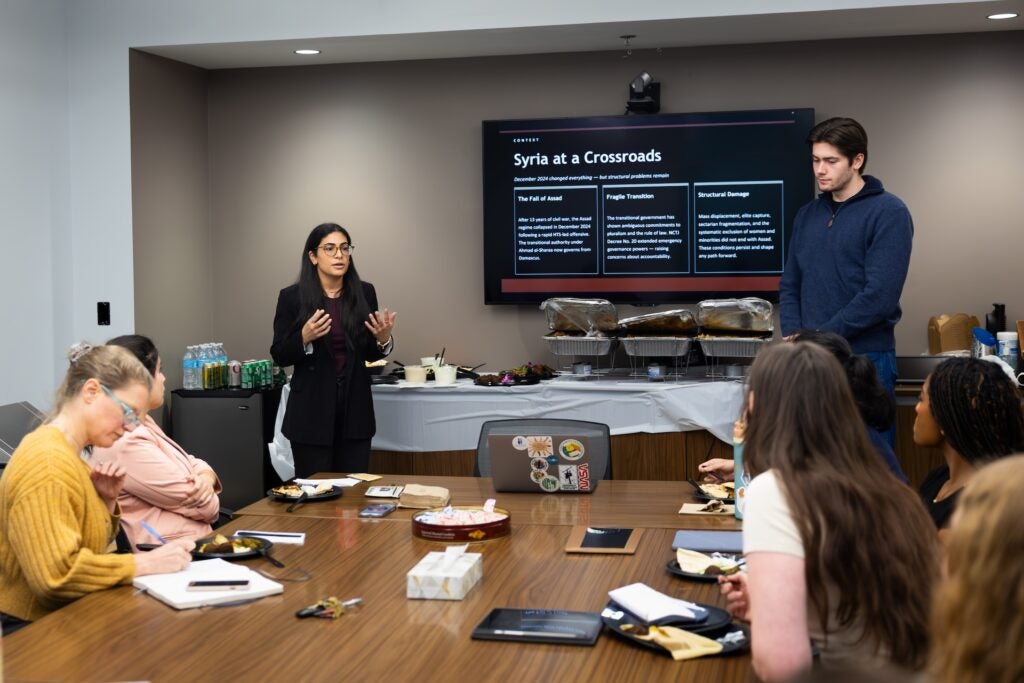
When Assad fell in December 2024, the world asked, what comes next for Syria? The harder question, which will determine whether the answer is peace or a new form of instability, is who gets to decide?
Analyzing post-conflict peacebuilding
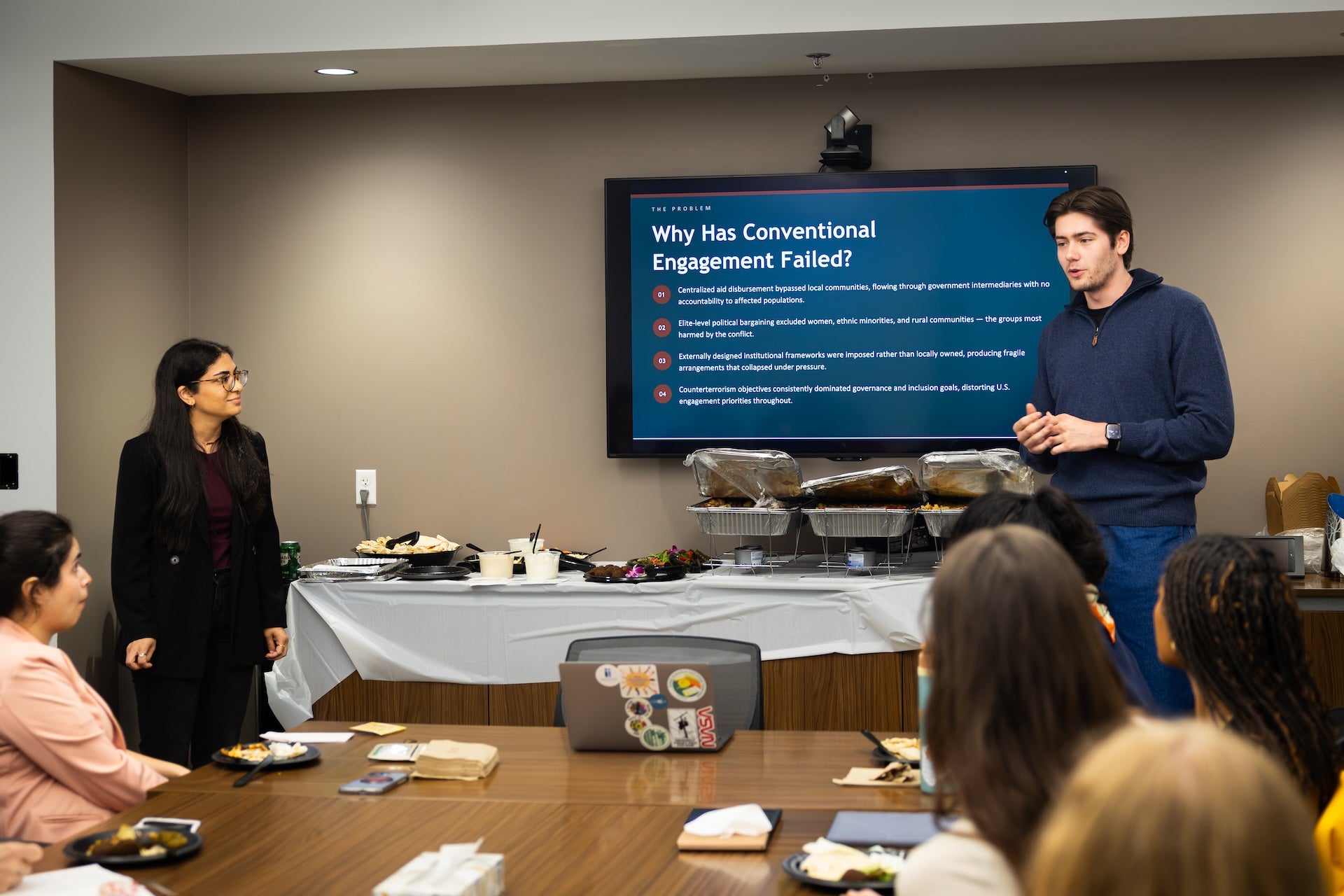
From this point onward, we decided to focus our practicum project on the issue of inclusive peacebuilding in post-conflict Syria. Our project examined how the United States can continue supporting peacebuilding efforts in Syria at a time when large-scale foreign aid is declining. We chose this issue because Syria remains deeply affected by more than a decade of conflict, displacement, economic collapse and political fragmentation.
Although the Assad regime collapsed, many of the underlying causes of instability still exist, including weak governance, social exclusion and unresolved communal tensions. We were especially interested in exploring how local communities, civil society organizations, women, youth and minority groups could play a larger role in rebuilding Syria and supporting long-term stability.
We connected with our partner organization, the New Lines Institute for Strategy and Policy, and conducted informational interviews throughout the fall 2025 semester. We both wanted to work on a project that combined academic research with practical policy work related to conflict resolution and the Middle East. New Lines Institute was a strong fit because of its focus on policy-oriented research and regional issues.
Throughout the spring 2026 semester, we worked closely with the Institute’s policy and editorial teams to develop and refine our report. This gave us valuable experience in producing research for policymakers and public audiences rather than only for academic purposes.
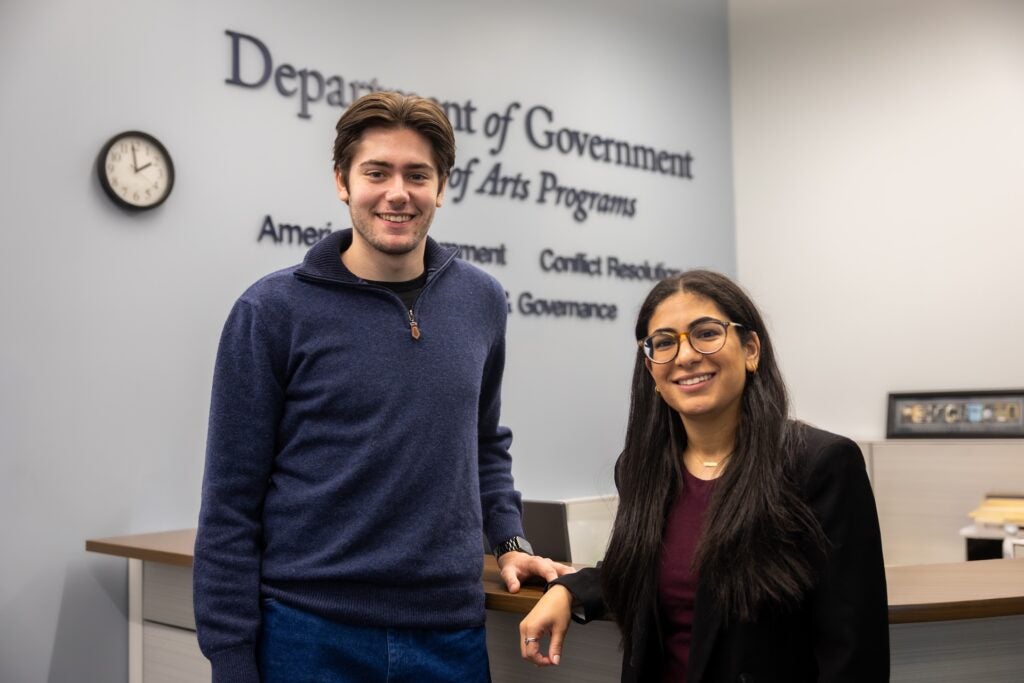
Antoine Brimbal (G’26) and May Kadow (G’26) posing together in front of the Department of Government sign.
Building a foundation for success
The M.A. in Conflict Resolution program at Georgetown University provided many of the skills and concepts that helped us throughout this experience. Mainly, one of our core courses in the program, Conflict Resolution Theory, helped us better understand post-conflict governance and social reconciliation. The program also strengthened our research, writing and analytical skills.
One of the most important lessons we applied during this project was learning how to translate academic research into clear and practical policy recommendations. Since our practicum deliverable was written as a policy report, we had to focus on being concise, organized and solution-oriented while still grounding our argument in evidence and scholarship.
The purpose and impact of the project
The end of a war is not the beginning of peace; it is only the beginning of a different kind of struggle. In Syria, that struggle is identifying who gets a seat at the table. Our policy report aims to offer recommendations for how the United States can get a seat, while supporting inclusive peacebuilding processes in Syria despite the decline of traditional aid mechanisms. The report is currently being reviewed for publication with the Middle East Policy Council under New Lines. More broadly, we hope the project contributes to conversations about how international actors can support locally driven peacebuilding efforts in conflict-affected societies.
This experience will help us accomplish our future professional goals by giving us practical experience in policy research, collaborative writing and conflict-related analysis. It also gave us a better understanding of how think tanks and policy organizations operate, including the process of drafting report proposals, responding to editorial feedback and communicating ideas to policy audiences. Both of us are interested in careers connected to conflict resolution, international policy and Middle East affairs. This project allowed us to apply what we learned in the classroom to a real-world policy issue.
Working together as a team was one of the most valuable parts of the practicum experience. The project required constant communication, collaboration and flexibility as we balanced research, drafting, revisions and deadlines throughout the semester. We worked closely together to divide responsibilities, exchange feedback and strengthen the final report. Overall, the experience reinforced the importance of teamwork, adaptability and clear communication in collaborative policy work. This experience was one of the most meaningful experiences of our graduate program.
Ready to build your conflict resolution skills?
Georgetown University’s Master’s in Conflict Resolution will prepare you through impactful conflict management training to resolve conflict in a turbulent world through advanced training that combines theoretical rigor and hands-on skills.